Allison, could you briefly introduce yourself and Bluequest Bahamas, and explain how your work on Delaporte Beach connects marine conservation with sustainable eco‑tourism in Nassau and across the islands?
My name is Allison Longley, and I am the founder of Bluequest Bahamas, a marine conservation and eco-tourism company based on Delaporte Beach in Nassau, Bahamas.
I am a PADI Master Scuba Diver Trainer with over 20 years of experience teaching scuba diving, snorkeling, and swimming. My passion has always been educating people on the importance of our marine ecosystems and the incredible marine life that depends on our precious coral reefs. Throughout my career, I have been committed to educating people of all ages and developing a deeper appreciation for our oceans. I specialize in marine education with a focus on coral reef restoration, combining science, conservation, and tourism to inspire meaningful connections with our marine environment.
Bluequest was created from a simple belief: tourism and conservation should work hand in hand. Every day, visitors come to The Bahamas to experience our crystal-clear waters and vibrant marine ecosystems, and we believe those same visitors can also become part of protecting them.
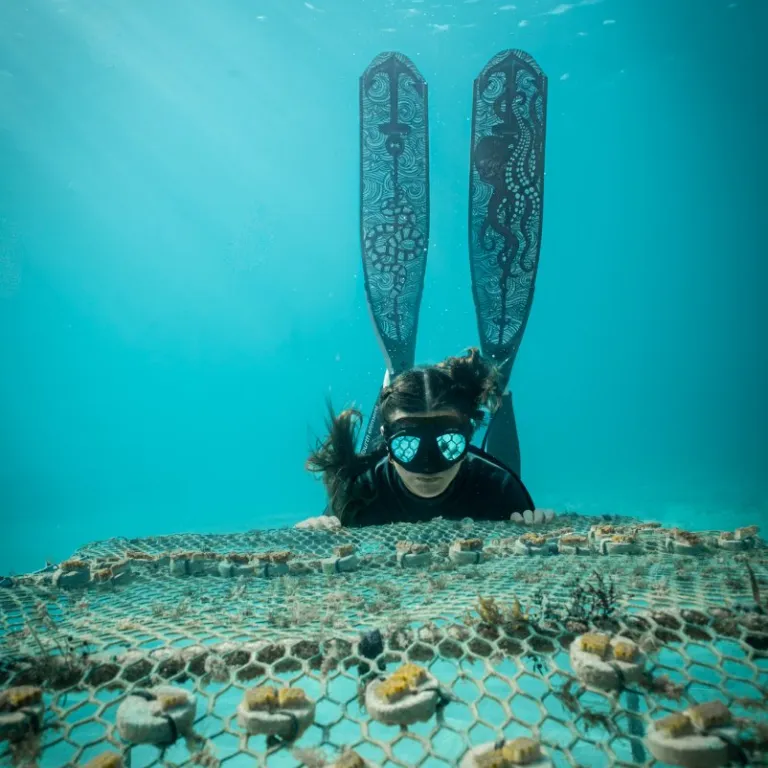
At Bluequest, we offer small-group eco-snorkeling experiences that take guests beyond the typical reef tour. Visitors learn about the vital interconnection between coral reefs, seagrass meadows, and mangrove forests while visiting our active coral nursery and seeing firsthand how reef restoration is helping to rebuild these ecosystems. By combining education with immersive experiences, we hope every guest leaves with a deeper appreciation for the ocean and a greater understanding of why we must protect and restore our reefs.
Operating from Delaporte Beach allows us to maintain a low environmental footprint. Our shore-based coral nursery allows visitors to connect with coral restoration directly. Sustainability is woven into every aspect of our operation, from promoting reef-safe practices and reducing single-use plastics to supporting local conservation initiatives.
Although Bluequest is based in Nassau, our mission extends across The Bahamas. Healthy coral reefs are essential to every island as they support fisheries, protect our coastlines, sustain tourism, and preserve the natural beauty that makes our country so unique. Through conservation, education, and responsible tourism, we’re working to inspire both residents and visitors to become stewards of our oceans, ensuring these extraordinary ecosystems can thrive for generations to come.
For me, Bluequest is more than a business, it's a platform to show that tourism can be a powerful force for conservation. Every snorkel tour, every educational experience, and every conversation is an opportunity to protect what makes The Bahamas one of the world’s most extraordinary marine destinations.
For someone who has never visited a coral nursery, how would you describe what is happening just offshore from Nassau with the PIMS–Bluequest project, and why micro‑fragmentation is such a game‑changer for endangered corals like elkhorn and staghorn?
Many people are surprised to learn that just a few fin kicks away from the beach, there is a living coral nursery where hundreds of young corals are being carefully grown and nurtured before they are returned to the reef.
Coral reefs in The Bahamas and around the world are facing an unprecedented crisis. Rising ocean temperatures caused by climate change are triggering widespread coral bleaching which can ultimately result in death of corals, while diseases such as Stony Coral Tissue Loss Disease(SCTLD), stronger hurricanes, pollution, and unsustainable human practices have caused significant declines in coral cover throughout the Caribbean. In fact, globally more than 50% of the coral reefs have been lost over the past several decades, and major reef-building species like elkhorn and staghorn corals are listed as critically endangered. If this trend continues by 2050 over 80% of our coral reefs will be deceased. The Bahamas is a low-lying coastal nation, vulnerable to climate change and the devastating effects on strong storms and hurricanes. Coral reefs are our first line of defense in protecting our coastlines as they break up wave energy by 97%. Coral reef support puts food on our table through fisheries and roofs over our heads through the tourism industry. Loss of coral reefs threaten our way of life in The Bahamas.
Through the partnership between Bluequest Bahamas and the Perry Institute for Marine Science (PIMS), we are helping restore some of the Caribbean’s most important reef-building corals, including critically endangered elkhorn, mountainous star coral and brain coral. These species are the architectural foundation of our reefs, creating complex underwater structures that provide shelter for countless fish, invertebrates and key species in The Bahamas such as nassau grouper, queen conch, caribbean spiny lobster while helping protect our shorelines from wave energy and erosion.
One of the most exciting innovations in coral restoration is a technique called micro-fragmentation. Corals naturally grow very slowly, often taking decades to form large colonies. With micro-fragmentation, healthy donor corals are carefully sourced then divided into tiny pieces and attached to specialized nursery structures, where they grow under carefully monitored conditions.
This technique allows corals to grow up to 50 times faster than they would in nature alone. As the fragments grow, they fuse together to form a single, larger colony, dramatically speeding up the restoration process. This means we can restore damaged reefs in months rather than decades.
Once the corals have reached a healthy size, they are outplanted onto nearby degraded reef sites. There, they continue to grow, provide habitat for marine life, strengthen the reef structure, and eventually reproduce naturally.
While coral restoration is not a standalone solution to the global reef crisis, it is a powerful tool for rebuilding reef resilience. Combined with efforts to address climate change, improve biodiversity of marine life to support fisheries, and reduce local environmental impacts, it gives our reefs a much greater chance of surviving and recovering for future generations.
What makes the PIMS–Bluequest project especially meaningful is that it brings conservation to life. Visitors don’t just hear about coral restoration, they experience it firsthand. Seeing a coral nursery in the ocean and learning how these fragile animals are being given a second chance creates a powerful connection to the marine environment. Our hope is that every guest leaves not only with unforgettable memories, but also with a deeper understanding of why coral reefs matter and how each of us has a role to play in protecting the future of The Bahamas.
The nursery has grown from just over 120 corals to hundreds of fragments despite heat stress and other seasonal pressures. What have you learned on the ground about climate resilience in Bahamian reefs, and how is that shaping the way you manage and design the nursery?
One of the biggest lessons we’ve learned is that resilience already exists within our coral nursery as our coral babies continue to thrive throughout the years. Even during periods of heat stress and other seasonal challenges, we’ve seen many corals continue to survive, grow, and recover. That gives us hope and reinforces the importance of protecting and restoring these resilient individuals.
As our nursery has grown from just over 120 corals to hundreds of fragments, we’ve adapted our management based on what we’ve observed in the field. We closely monitor the corals for signs of stress, disease, predation, and bleaching, allowing us to respond quickly when conditions change. Regular maintenance, cleaning, and monitoring are essential to keeping the nursery healthy.
We’re also learning which coral genotypes perform best under different environmental conditions. The Bluequest Coral Nursery is home to one the most diverse coral nurseries in The Bahamas as it has many coral genotypes. Diversity is important as we can increase the nursery’s overall resilience and support the long-term health of restored reefs. Diversity is critical because no single coral is resilient to every threat.
Climate change remains and Stony Coral Tissue Loss Disease are the two greatest challenges facing coral reefs, so restoration alone is not enough. Our goal is to give reefs the best possible chance to recover by growing healthy, resilient corals while continuing to educate visitors about the importance of reducing local stressors such as pollution, overfishing, and physical damage to reefs.
Every day in the nursery teaches us something new. Coral restoration is an ongoing learning process, and we’re continually adapting our techniques based on science and firsthand observations. That combination of research, collaboration, and practical experience is helping us build stronger, more resilient reefs for the future of The Bahamas
Bluequest is known for turning scientific work into community experiences, like your Community Snorkels at Delaporte Beach. Can you walk us through a typical snorkel session and explain how witnessing coral outplanting first‑hand changes people’s attitudes and behaviors as tourists and locals?
At Bluequest, we believe marine conservation should be something everyone can experience. You don’t have to be a scientist or a scuba diver to help protect our oceans.
Our Reef Rescue Snorkel Experience begins on Delaporte Beach, where guests learn about our amazing marine ecosystems and why coral reefs are so important. We explain how reefs protect our coastlines, support marine life, and play a vital role in our tourism industry and economy. Before entering the water, everyone receives a snorkel safety briefing and learns how to explore the reef responsibly.
We then snorkel to our shallow water nearshore coral nursery, where guests see coral restoration happening in real time. They learn about coral ecology, identify reef fish, and discover how endangered corals are being grown and restored using modern restoration techniques.
What makes this experience special is that guests become part of the conservation effort. They can help clean and care for the young corals in the nursery, giving them a hands-on understanding of how coral restoration works. At the end of the tour, each participant receives an accredited Reef Rescue Certificate to recognize their contribution.
For many people, it’s the first time they realize that corals are living animals and that damaged reefs can be restored. Seeing hundreds of young corals growing in the nursery creates a lasting connection with the ocean and inspires people to protect it.
Many guests want to continue making a difference after their visit, so they choose to support our Adopt a Coral program. Through this initiative, they sponsor the growth and outplanting of a coral onto a nearby reef, allowing them to play a direct role in restoring The Bahamas’ coral reefs long after their vacation has ended.
Our goal is simple, we strive to inspire every guest, student and resident and to leave with unforgettable memories, a better understanding of our marine environment, and the knowledge that everyone can make a difference in protecting our oceans by making more sustainable choices in their everyday lives no matter where they reside.
Winning the CCEA award in the UN Tourism Bahamas Sustainable Islands Challenge recognizes your approach at the intersection of conservation and tourism. In practical terms, what does a truly ‘sustainable’ marine excursion or eco‑tour in The Bahamas look like, and where do you still see greenwashing or missed opportunities in the sector?
Winning the UN Tourism Bahamas Sustainable Islands Challenge was an incredible honour because it recognized that conservation and tourism don’t have to exist separately, they can strengthen one another. This award was not only a win for Bluequest and its mission but for marine conservation in The Bahamas.
To me, a truly sustainable marine excursion is one that gives back more than it takes. It should protect the environment, educate guests, support the local community, and contribute to the long-term health of our marine ecosystems.
At Bluequest, sustainability starts before our guests even arrive. We encourage reef-safe practices, minimize single-use plastics, operate our tours from shore to reduce our carbon footprint, and keep our groups small to reduce pressure on the reef. Most importantly, every tour includes marine education, so guests leave understanding not only the beauty of our reefs but also the challenges they face and how they can help protect them.
A reef-positive business goes a step further. It doesn’t simply avoid harming the reef, it actively contributes to its recovery. Through our coral nursery, reef restoration work, Community Snorkels, and Adopt a Coral programme, every guest has the opportunity to become part of the solution.
I believe there are still many opportunities for the tourism sector in The Bahamas to become more reef positive. Many marine tours depend on healthy coral reefs, yet few directly invest in their restoration. Operators could support coral nurseries, include marine conservation education in every excursion, train staff in reef-safe practices, reduce plastic waste, use environmentally friendly moorings instead of anchoring on reefs, and contribute financially to restoration projects.
The Bahamas is home to the most ecologically and economically important marine ecosystems in the world. Protecting them isn’t just an environmental responsibility, it’s essential for the future of our tourism industry and our economy. If every marine tourism business gave back in some way, whether through restoration, education, or conservation funding, the collective impact would be transformational.
Sustainability isn’t just about reducing our footprint. It’s about creating a positive impact so that our reefs are healthier tomorrow than they are today. That’s what we mean by being truly reef positive.
Looking ahead, how do you envision scaling this model of reef restoration plus eco‑tourism—both in terms of expanding the nursery network across The Bahamas and influencing how the broader tourism industry structures its offerings and standards?
Our vision is to demonstrate that reef restoration and tourism can work together to create both environmental and economic benefits. We hope Bluequest becomes a model that can be replicated throughout The Bahamas.
As we grow, we’d like to establish additional shore-based coral nurseries on other islands and in coastal communities, creating a network of restoration sites that support local reefs while offering unique eco-tourism experiences. Every island has its own reef systems, and local communities can play an important role in protecting and restoring them.
Education will continue to be at the heart of everything we do. We want to expand opportunities for Bahamian students, volunteers, and visitors to participate in coral restoration, creating a new generation of ocean stewards who understand the value of healthy marine ecosystems.
We also plan to expand our eco-tourism experiences to make nature more accessible to everyone, giving visitors of all ages and abilities the opportunity to discover the incredible biodiversity of The Bahamas while learning how these ecosystems are connected.
We also hope to inspire the tourism industry to adopt reef-positive practices as the new standard. Marine operators, hotels, cruise lines, and waterfront developments all benefit from healthy reefs, and we believe they also have a responsibility to help protect them. This can include supporting coral nurseries, offering conservation experiences, reducing environmental impacts, educating guests, and investing directly in reef restoration.
Beyond the water, we see opportunities to enhance and beautify our public beach parks, creating welcoming spaces where residents and visitors can connect with nature, learn about marine conservation, and take pride in the incredible coastal environments that make The Bahamas so special.
Ultimately, our goal is to shift the mindset from simply enjoying our marine environment to actively protecting it. If every visitor left The Bahamas knowing they had helped restore a coral, learned something new about our oceans, or contributed to conservation, tourism would leave a lasting positive impact on both our communities and our reefs.
For us, success isn’t measured only by the number of guests we welcome, it’s measured by healthier reefs, stronger partnerships, more informed communities, beautiful and well-cared-for coastal spaces, and a tourism industry that recognizes conservation as an investment in the future of The Bahamas.
For readers who love visiting The Bahamas and want to protect its reefs, what concrete actions—before, during, and after their trip—would you most like them to take to support marine conservation and responsible eco‑tourism?
Every visitor has the super power to make an immediate, positive difference. Protecting our reefs does not require special training; it starts with the choices you make before, during, and after your trip, and those choices can help safeguard coral reefs right away.
Before you arrive, choose tour operators committed to sustainable, reef-positive practices. Pack reef-safe sunscreen or, even better, wear a rash guard or UV-protective clothing, and bring a reusable water bottle to cut down on single-use plastics from the start.
While you’re here, make every moment count. Treat the ocean with care: never stand on, touch, or collect corals or marine life, and never feed fish, as it disrupts their natural behaviour. Follow your guide’s instructions, dispose of litter properly, and support local businesses that actively protect the environment. These simple actions help reduce stress on fragile reef ecosystems immediately.
If you have the opportunity, join Bluequest’s Reef Rescue Experience to see our reefs up close and learn how conservation works in action. You can also make a direct contribution through our Adopt a Coral programme, which helps grow and outplant corals onto degraded reefs, giving damaged areas a real chance to recover.
When you return home, keep the momentum going. Follow Bluequest on social media (instagram @bluequestbahamas) for updates from our coral nursery, reef restoration projects, and the corals you’ve helped support. Share what you’ve learned with family, friends, schools, or your workplace to inspire others to take action for coral reefs.
Then bring those habits into your everyday life. Reduce your use of single-use plastics, choose sustainable seafood, conserve water and energy, recycle whenever possible, and support businesses that prioritize environmental responsibility. Climate change and pollution affect coral reefs around the world, so the decisions we make every day, no matter where we live, can help protect these ecosystems for the future.
The Bahamas is home to some of the most beautiful marine ecosystems on Earth. By travelling responsibly and choosing experiences that give back to nature, visitors can leave a meaningful impact long after their vacation has ended.
At Bluequest, we believe conservation is a shared responsibility. Every action whether it’s choosing a sustainable tour, adopting a coral, reducing plastic waste, or sharing your experience with others helps ensure that our coral reefs continue to thrive for generations to come.
Learn more: https://live.vcita.com/site/bluequest