Junkanoo Bahamas as the heartbeat of luxury island travel
Junkanoo in the Bahamas is not just a colourful street event. This carnival-style tradition shapes how you feel the islands long after the last goatskin drum fades, and it should influence where you book your luxury hotel in Nassau or across the wider Bahamian island chain. For a solo explorer planning a premium stay, understanding how Junkanoo, Bahamian music and cultural festivals intersect with high-end hospitality will help you choose a property that brings you closer to the real Caribbean paradise rather than keeping you behind glass.
Most travellers first hear about Junkanoo Bahamas as a Boxing Day spectacle on Bay Street in downtown Nassau. The main Junkanoo parade usually starts around midnight on December 26 and again on the first day of the year, and for around six hours the city centre becomes a moving artwork of Junkanoo costumes, brass instruments and choreographed dance. Luxury hotels that understand Bahamian culture will not just sell you a balcony view of the Junkanoo festival; they will brief you on the history, arrange guided access and time your transfers so you slip into the celebration rather than fight the crowds.
The roots of Bahamas Junkanoo run deep in the islands and stretch far beyond a single Christmas holiday. Junkanoo began when enslaved Africans in the Bahamas and other Caribbean territories were granted a brief three-day break around Christmas, and they used that time to create a street festival of drums, masks and dance that honoured both survival and resistance. When you read about John Canoe, the figure often linked to the name Junkanoo, you start to see why this celebration still matters so much in Nassau, Bahamas, and why a thoughtful luxury stay should give you space to engage with it respectfully.
From shack to Bay Street: inside the year-round Junkanoo world
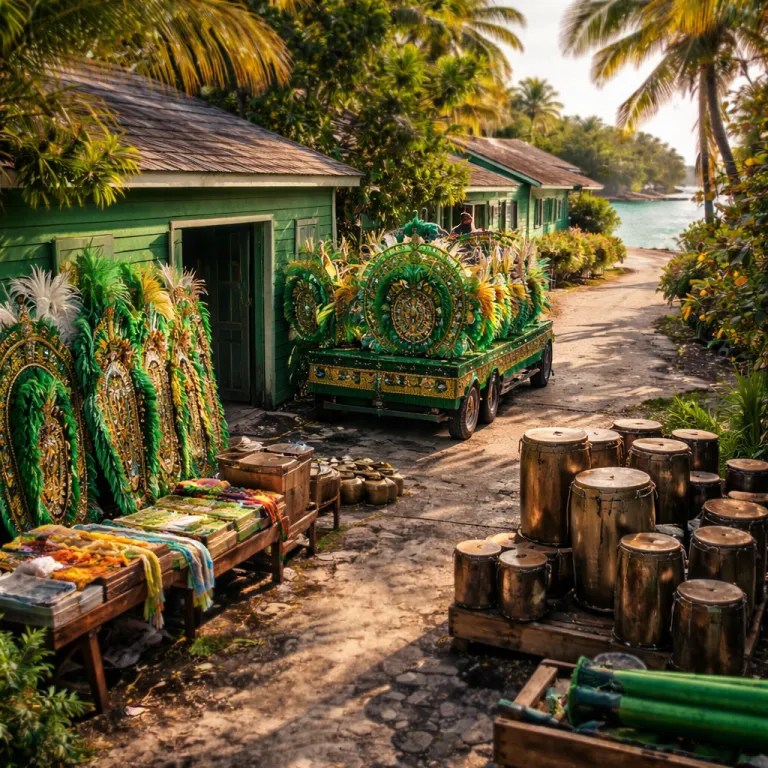
To understand Junkanoo Bahamas properly, you need to step away from Bay Street on parade day and into the shacks where the magic is built. Across Nassau and on some other Bahamian islands, Junkanoo groups work for most of the year in corrugated sheds and open-air yards, cutting cardboard, twisting wire and layering crepe paper into towering Junkanoo costumes. These spaces are not theme park attractions; they are working studios where Bahamian culture is negotiated in real time through colour, rhythm and debate.
Months of preparation go into every Junkanoo parade, and the process is as important as the final carnival-style celebration. Artisans glue thousands of tiny paper fringes onto frames, musicians rehearse complex rhythmic patterns on goatskin drums and brass instruments, and choreographers refine steps so that each section of the group moves like a single living sculpture. Major groups such as the Saxons Superstars, Valley Boys and One Family, all regularly cited in official parade results, often start sketching themes as early as spring, and by late autumn the shacks hum every night with activity.
These shacks operate as social clubs, training schools and cultural archives all at once, and they are central to Bahamas Junkanoo as a living art form. On Paradise Island and in the Nassau Paradise resort area, some premium hotels now invite shack leaders to host small workshops on site, bringing cardboard, crepe paper and miniature Junkanoo costumes so guests can try their hand at pasting while listening to live music. For a solo traveller, this kind of intimate Junkanoo celebration offers a richer connection than simply watching festivals from a distance, and it turns your stay in island paradise into a genuine cultural exchange.
The art, sound and scoring of a Junkanoo celebration
On parade night, Junkanoo Bahamas becomes a moving gallery where every detail is judged, scored and remembered. Groups compete in categories that cover Junkanoo costumes, music, choreography and overall theme, and the competition is fierce because a win on Bay Street echoes through Bahamian culture for many years. In the major parades, judges award points for best banner, best off-the-shoulder costume, best music and best overall performance, and the top group in each division earns coveted bragging rights along with cash prizes, as outlined in official Junkanoo competition guidelines released before each season.
The sound of a Junkanoo celebration is built from simple instruments played with extraordinary discipline and joy. Goatskin drums drive the rhythm, cowbells add a metallic heartbeat, brass instruments carry the melody and whistles slice through the night air so the dancers can keep time even when the crowd roars. Luxury hotels along the Nassau harbour and on Paradise Island often provide earplugs and practical advice because the music is loud, but the best concierges will also explain how each instrument section fits into the wider Caribbean soundscape that links the Bahamas to Jamaica and other islands.
Costume design is where many visitors first fall in love with Junkanoo Bahamas, and it is also where you see the tension between tradition and innovation. Cardboard and crepe paper remain the core materials, yet modern adhesives, lightweight plastics and LED details have crept into some Junkanoo costumes as groups push for visual impact under the streetlights. As one veteran costume builder told a local newspaper, “Every feather and fringe has to move with the music, or the story falls flat.” When you read the judges’ criteria, you realise that a winning Junkanoo parade entry must balance craftsmanship, storytelling and movement, and that balance is what makes Bahamas carnival-style events feel both ancient and sharply contemporary.
Where luxury travellers can engage with Junkanoo beyond parade days
For many visitors, Junkanoo Bahamas is synonymous with Boxing Day on Bay Street, but the culture breathes all year across the islands. In Nassau, Bahamas, the Educulture Junkanoo Museum, founded by local educator Arlene Nash-Ferguson and frequently referenced in tourism board materials, offers guided experiences where you can handle instruments, try on scaled-down Junkanoo costumes and read detailed timelines that explain how the celebration evolved from plantation yards to national cultural festivals. The official guidance is clear on access and timing, and local experts emphasise that “Can visitors participate in Junkanoo? Yes, visitors can join by arranging through hotels.”
Outside parade season, you will hear Junkanoo-inspired music at Da Fish Fry on Arawak Cay, at Harbour Island street parties and in smaller Bahamas carnival events that blend rake-and-scrape with brass band arrangements. Some luxury properties on Paradise Island and in the Nassau Paradise area host curated evenings where shack leaders bring a mini Junkanoo festival to the hotel courtyard, complete with drums, horns and a short parade that loops around the pool deck. These experiences work best when they are framed as introductions to Bahamian culture rather than as stand-alone shows, encouraging guests to venture into town for the full celebration when the time is right.
Beyond Nassau, Bahamian island destinations such as Harbour Island and the Family Islands host smaller parades and festival-style events that echo the main Junkanoo celebration but feel more intimate. If you are planning a multi-island itinerary, consider pairing a few nights in a harbourfront suite near Bay Street with a quieter stay on Harbour Island, timing your trip so you can attend both a major Junkanoo parade and a village-scale celebration. For help aligning your hotel reservations with cultural festivals and premium services, speak with your preferred luxury travel advisor or concierge team, who can cross-check parade calendars with availability at top-tier properties.
Designing a luxury itinerary around Junkanoo and Bahamian culture
Building a luxury trip around Junkanoo Bahamas means thinking in layers rather than chasing a single parade. Start by anchoring your dates around Boxing Day or the first day of the year, then add nights before and after so you can visit shacks, museums and quieter neighbourhood celebrations without rushing. High-end hotels in Nassau, Bahamas, and on Paradise Island often release minimum stay requirements early, so booking through a specialist platform or trusted agent will help you secure flexible terms while still keeping you close to Bay Street.
On parade night, you will want both comfort and proximity, especially as the celebration runs deep into the night and early morning. Some luxury properties offer hosted viewing areas along the Junkanoo parade route, with reserved seating, late-night snacks and private restrooms, while others focus on arranging transfers and on-call concierges so you can move between the street and your suite with ease. Either way, plan your time so you can read the energy of the crowd, step into the music when you feel ready and retreat to quiet when the instruments and whistles become overwhelming.
After the main Bahamas Junkanoo events, consider extending your stay to another island where the pace slows but the cultural thread continues. Harbour Island, for example, pairs pink sand beaches with small-scale festivals that echo the rhythms of Junkanoo Bahamas without the intensity of Bay Street, while out on more remote Bahamian islands you may encounter drumming circles that keep the spirit of John Canoe alive in more informal ways. This balance between high-energy carnival and low-key cultural immersion is where a luxury Bahamas itinerary truly becomes a personal paradise for the solo explorer who values both comfort and connection.
Balancing authenticity and comfort when booking premium stays
One of the most nuanced questions around Junkanoo Bahamas is how to experience it deeply without turning it into a backdrop for selfies. Luxury hotels and premium booking platforms sit at the centre of this tension, because the way they package Bahamas Junkanoo experiences will shape how guests behave on Bay Street and in the shacks. As a traveller, you hold power too, and the choices you make about where to stay, how to spend your time and what you share online will influence whether this celebration remains rooted in Bahamian culture or drifts into generic Caribbean carnival territory.
Look for properties that support Junkanoo groups directly, whether through sponsorships, staff participation or educational programming that goes beyond a single Junkanoo festival night. When a hotel invites artisans to host workshops, pays fair fees for performances and encourages guests to read about the history of John Canoe and the festival’s origins, it signals respect rather than extraction. You will feel that difference when staff talk about Boxing Day, Christmas traditions and other cultural festivals, because their pride will be personal rather than scripted.
Finally, remember that Junkanoo Bahamas is first and foremost a community celebration, not a product designed for visitors, even though tourism now plays a major role in its economy. Treat the Junkanoo parade route as a shared space, follow local guidance on photography and participation, and use your luxury hotel as a base for reflection as much as for comfort between events. When you approach Bahamas carnival-style experiences with this mindset, your time in Nassau Paradise, Harbour Island or any other island paradise will feel less like a packaged holiday and more like a respectful conversation with the islands themselves.
FAQ: Junkanoo Bahamas and luxury travel
When is Junkanoo celebrated in the Bahamas ?
Junkanoo in the Bahamas is celebrated annually on December 26, known locally as Boxing Day, and again on January 1, the first day of the year. The main parades in Nassau usually start around midnight and continue for several hours into the early morning. Smaller Junkanoo celebration events and related festivals may also appear at other times, but these two dates remain the core of the tradition.
Can visitors participate in a Junkanoo parade or is it only for locals ?
Visitors can participate in certain aspects of Junkanoo Bahamas, especially through organised programmes run by hotels and cultural organisations. Some luxury properties in Nassau, Bahamas, and on Paradise Island work with Junkanoo groups to offer costume-making workshops, music sessions and even supervised participation in smaller parades. For the main Bay Street events, full group membership is usually reserved for locals, but guests can still join pre-arranged sections or viewing areas when coordinated respectfully.
Which area is best to stay in for easy access to Junkanoo in Nassau ?
For direct access to the main Junkanoo parade route, staying near downtown Nassau or along the harbourfront places you within walking distance of Bay Street. Luxury resorts on Paradise Island and in the Nassau Paradise area also work well, as they offer quick transfers over the bridge while providing a quieter retreat once the music ends. Solo travellers often choose a split stay, combining a few nights close to the action with time on Harbour Island or another quieter island afterwards.
How loud and crowded is Junkanoo, and how should I prepare ?
Junkanoo Bahamas is intense, with powerful drums, brass instruments and whistles echoing through relatively narrow streets, and crowds can be dense along key sections of Bay Street. Luxury hotels typically advise guests to wear comfortable clothing, bring ear protection if sensitive to noise and arrive early to secure good viewing spots or access to reserved stands. Planning rest periods at your hotel between parade segments will help you enjoy the full celebration without feeling overwhelmed.
Is Junkanoo only in Nassau or can I experience it on other islands too ?
While Nassau hosts the largest and most famous Junkanoo festival events, other Bahamian communities also stage their own parades and celebrations. Harbour Island, Grand Bahama and several Family Islands hold smaller Junkanoo celebration nights, often linked to local holidays or community festivals, which can feel more intimate and less crowded. If you are designing a luxury itinerary, combining Nassau with one or two outer islands will give you a broader view of how Bahamian culture expresses itself through Junkanoo across the archipelago.