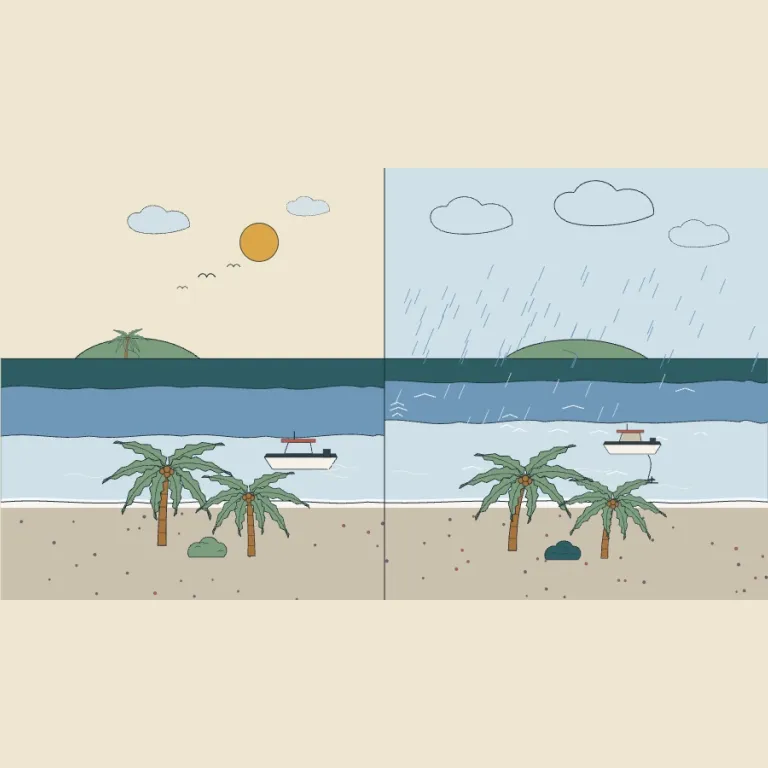
The best time to visit the Bahamas is mid-December to mid-April, the dry season, when Nassau sits at 75 to 78 °F (24 to 26 °C) with six to seven rainy days a month. The sharpest value falls in November and in late April to early May, on either side of the crowd. Avoid September: it is the wettest month in Nassau, the statistical peak of the hurricane season, and the month when the country recorded only 52,641 air arrivals against 201,081 in March 2025. The sea never drops below 76 °F (25 °C). Start planning on stay-in-bahamas.com.
The Bahamas at a glance
- Best overall: mid-December to mid-April, dry, breezy, sea at 76 to 79 °F (24 to 26 °C).
- Best value: November and early December, then late April and May, when rain is still low and air arrivals drop by a third.
- Worst month: September, the wettest in Nassau and the peak of the Atlantic hurricane season.
- Dry season: November to April, per the Bahamas Department of Meteorology. Wet season: late May to October.
- Hurricane season: June 1 to November 30, peak September 10 (NOAA National Hurricane Center).
- Warmest water: August and September, at 86 °F (30 °C) off New Providence. Coolest: February, at 76 °F (25 °C).
- Busiest air month: March. Quietest: September, at roughly a quarter of March's arrivals.
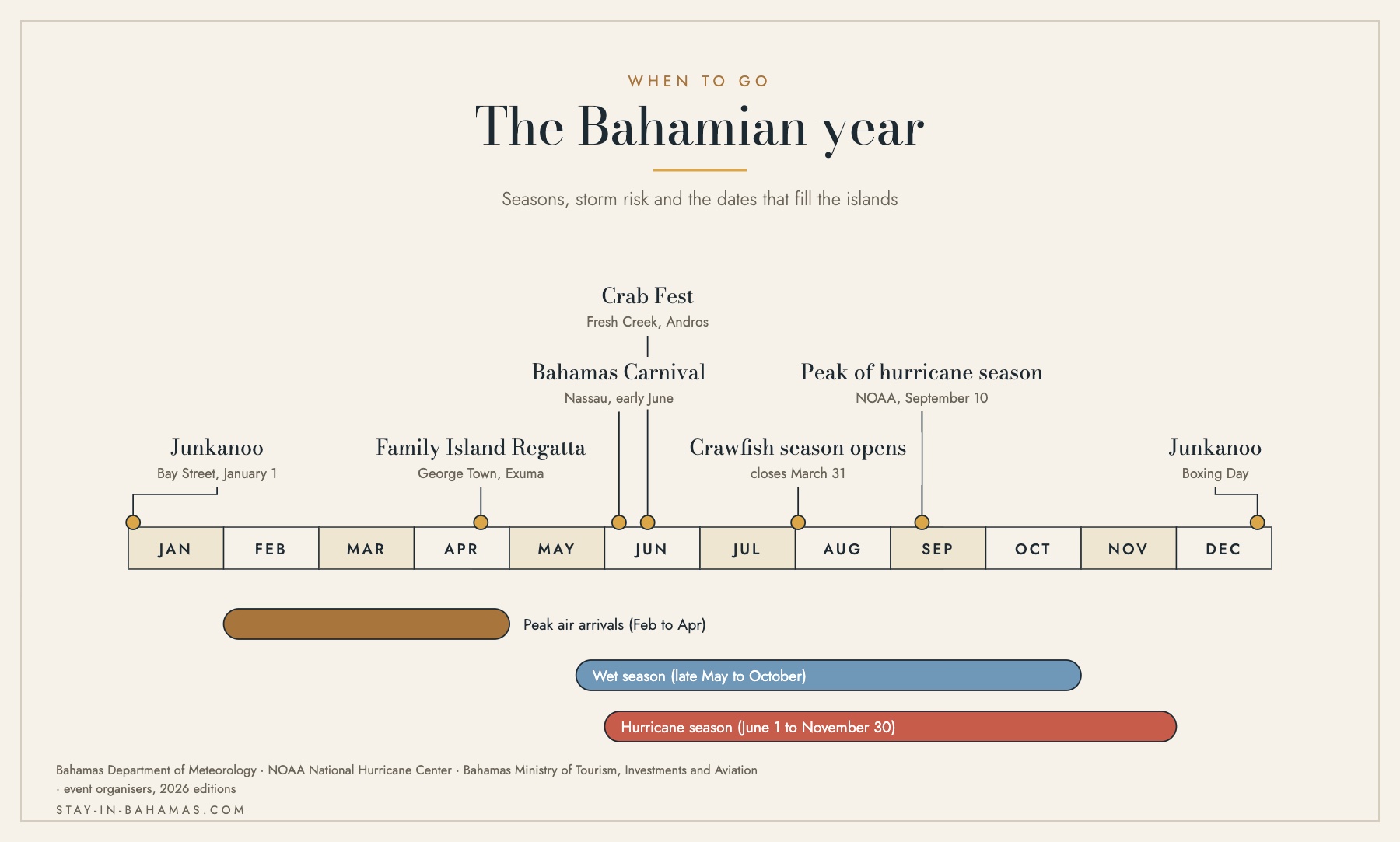
The Bahamian year: seasons, storm risk and the dates that fill the islands.
Understanding the climate of the Bahamas
The Bahamas has two seasons, not four, and the split is about rain rather than temperature. The Department of Meteorology describes the climate as tropical marine, wet and dry, with winter incursions of modified polar air from the North American continent. Monthly highs in Nassau move only 11 °F (6 °C) across the whole year, from 75 °F (24 °C) in January to 86 °F (30 °C) in August. Rainfall moves far more.
An Atlantic archipelago, not a Caribbean one
The islands run northwest to southeast across roughly seven degrees of latitude, and the Tropic of Cancer crosses Exuma and northern Long Island. That spread matters. Winter temperatures are lower on the northern islands than in New Providence and about five degrees higher in the south, according to the Department of Meteorology, while summer temperatures are much the same everywhere. Annual rainfall follows the same axis: about 60 inches a year on Abaco in the northwest, less than half that at Inagua in the southeast.
Nassau and the Exumas do not have the same year
Both sit in the same climate, but the numbers separate them. In February, Nassau averages 27 mm of rain over 6.0 days; Exuma averages 21 mm over 4.6 days. In August, Nassau peaks at 86 °F (30 °C) while Exuma holds at 83 °F (29 °C), because the Exuma cays are narrow and the sea governs the air. The reversal comes in autumn: October brings 136 mm to Nassau and 178 mm to Exuma, the wettest single month anywhere in this data set.
Cold fronts are the real winter event
From late October into early May, North American cold fronts push south into the islands behind strong northwesterly winds. The Department of Meteorology records that these fronts pass about once every five days in winter, that temperatures can fall to the upper forties Fahrenheit behind them, and that a day or two of 25-knot north and northeast winds can follow. In practice, that is what cancels a boat day in January, not rain. Ferries and small-plane hops between islands are the first things affected, so build a spare day into any multi-island itinerary.
The sea is swimmable every month
Sea surface temperatures off New Providence run from 76 °F (25 °C) in February to 86 °F (30 °C) in August, on 2016 to 2025 averages from NOAA. There is no month when the water is closed to swimming. What changes is the wind: winter fronts raise chop on north-facing shores, which is why the Exumas and the lee of Eleuthera stay usable when Cable Beach is whipped up.
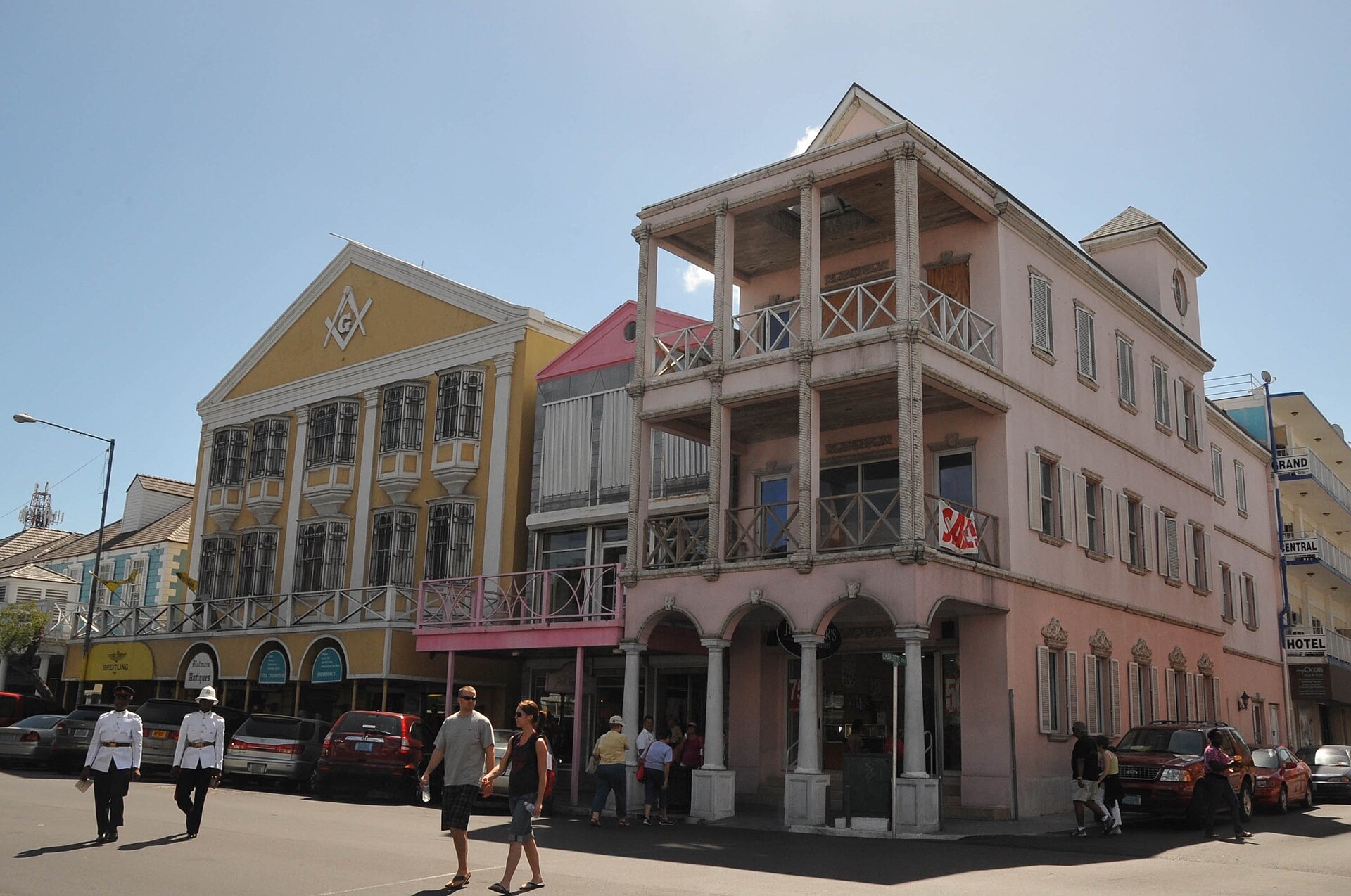
Bay Street, Nassau. Cruise calls concentrate in the dry season, which is when downtown is busiest between 9 a.m. and 4 p.m. Photo : Jerrye and Roy Klotz MD, Wikimedia Commons, CC BY-SA 3.0.

The dry season: November to April
The dry season is the period the country is built around, and it is the answer for most travelers. Rain in Nassau stays at or below 53 mm a month from November through April, with 6.0 to 9.3 rainy days. Sunshine peaks in April, when New Providence averages 9.3 hours a day over the 1971 to 2000 record, and bottoms out in December at 6.0 hours. Days are warm without being heavy, and nights ask for a light layer.
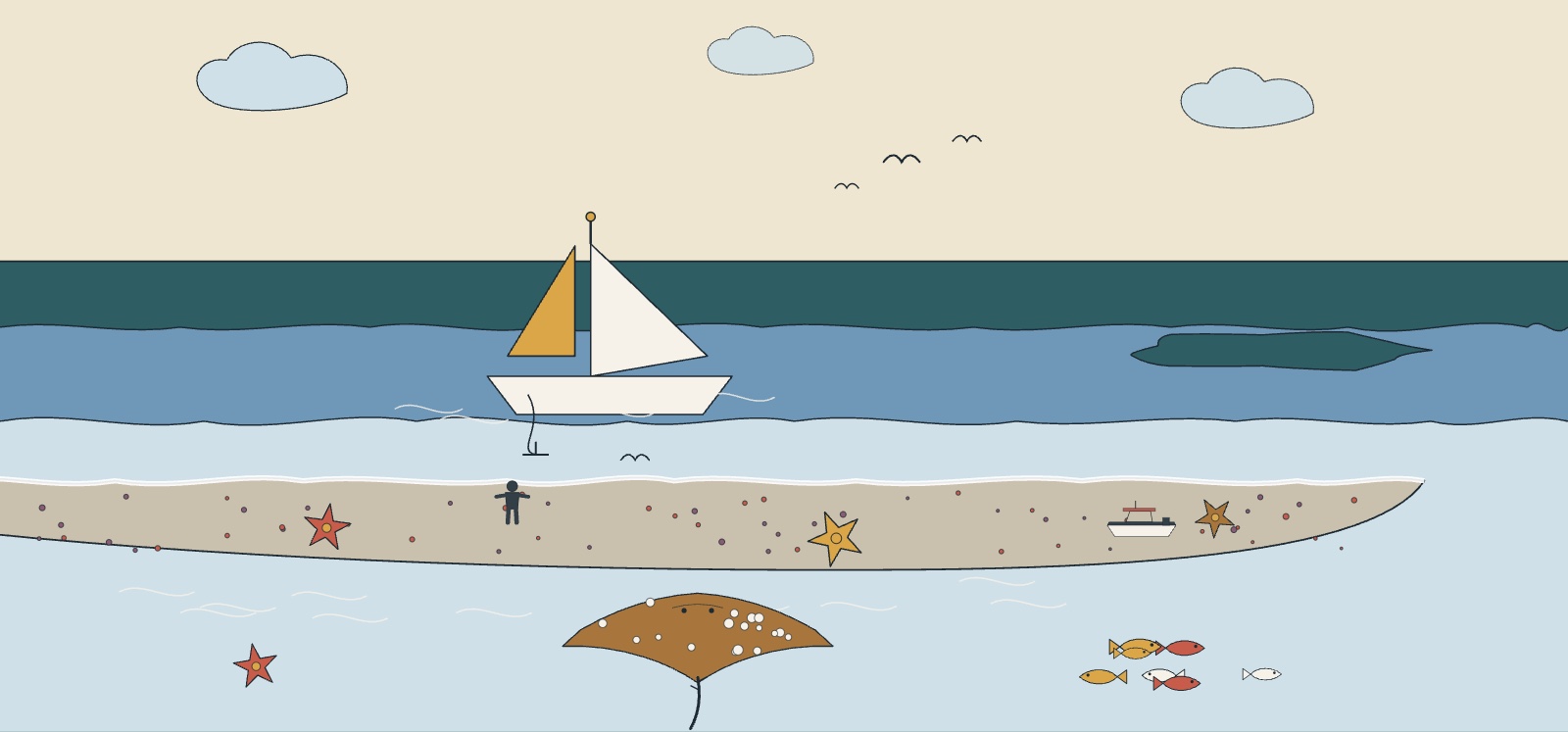
Sandbars and flat water: the dry season, from November to April, is the sailing and chartering window. Illustration : Luxury and Premium Hotel Booking in Bahamas.
The season splits into three very different markets.
- November and early December are the value window. Nassau sees 66 mm of rain over 9.3 days in November, the sea still holds 81 °F (27 °C), and air arrivals in November 2025 were 122,892, about 61 percent of the March figure.
- Mid-December to early January is festive and full. December 2025 brought 164,643 air arrivals and 1,212,105 cruise passengers, the highest cruise month of the year. Junkanoo runs in the small hours of Boxing Day and New Year's Day.
- February to mid-April is the driest and the most expensive stretch. February is the driest month in Nassau at 27 mm, March is the busiest month for air arrivals at 201,081, and Easter week fills the Out Islands.
Two practical points. First, the sea in January and February is at 77 and 76 °F (25 and 25 °C), warm enough to swim but cool enough that a long snorkel session wants a rash guard. Second, cruise calls concentrate in this window, so Nassau's Bay Street is at its most crowded between roughly 9 a.m. and 4 p.m. on a big-ship day, while Harbour Island and the Exumas never feel it.
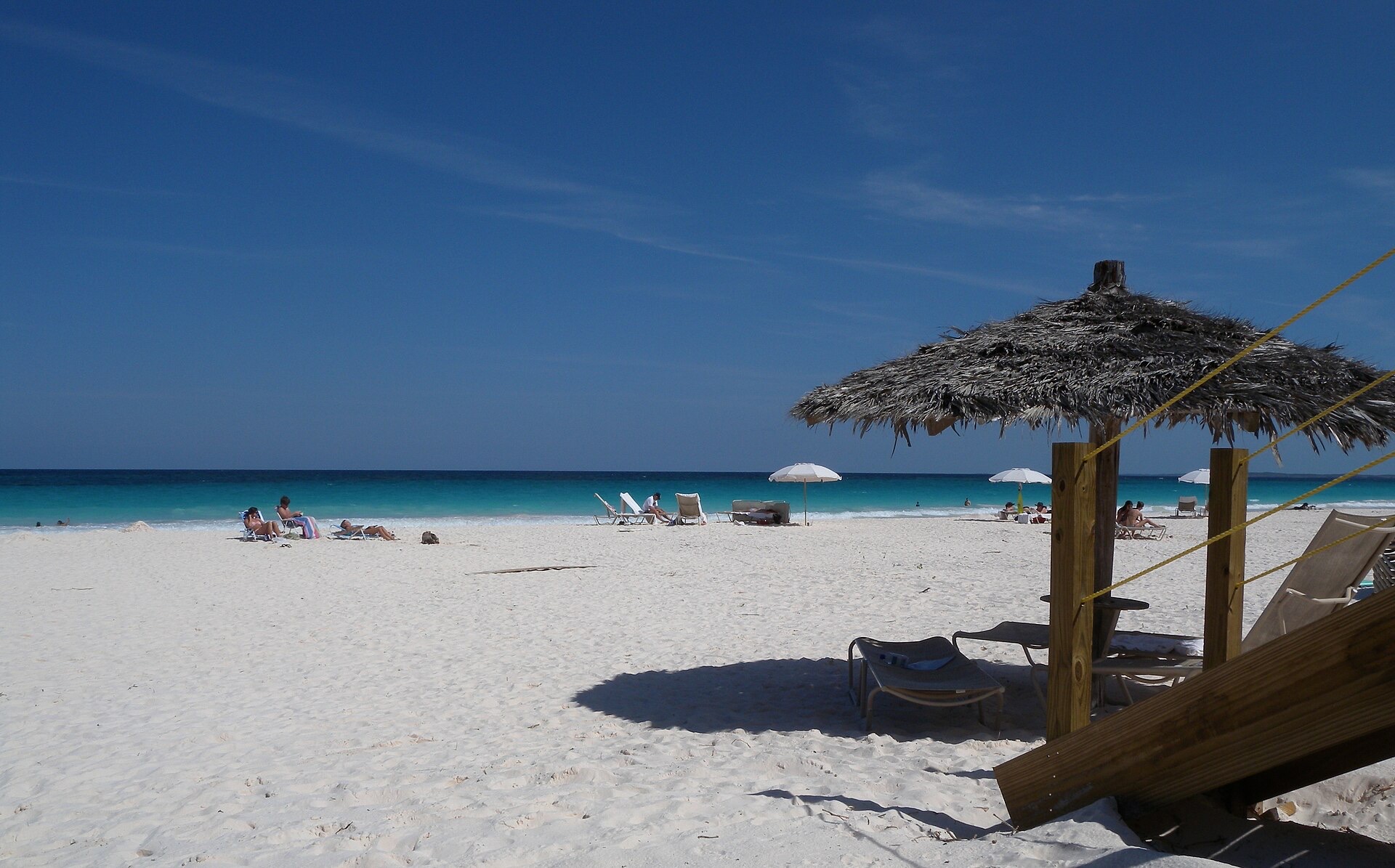
Pink Sands Beach, Harbour Island. Small room stock means Easter and Christmas sell out first. Photo : Oscar Flowers, Wikimedia Commons, CC BY-SA 3.0.

The wet season: late May to October
The wet season runs from late May to October and it does not mean washed-out days. Rain comes as afternoon showers or thunderstorms lasting up to an hour, according to the Department of Meteorology, with widespread rain only when a tropical system is nearby. Mornings are usually clear. Rain days climb steeply in Nassau, from 7.2 in April to 14.2 in June and 19.1 in September, while monthly totals in this reanalysis run 68 to 136 mm across June to October.
Heat and humidity are the real change. Nassau highs sit at 84 to 86 °F (29 to 30 °C) from June to August, with nights that stay near 80 °F (27 °C), and the Department of Meteorology notes that summer temperatures seldom rise above 90 °F (32 °C) by day. The sea reaches 86 °F (30 °C), which is bath-warm for snorkeling and means very little thermal relief at midday.
What the season buys you:
- Space. August air arrivals in 2025 were 116,269, a third below March, and September fell to 52,641.
- Water clarity for reef work, since the flat calms between fronts are a summer feature, not a winter one.
- Crawfish. The Bahamian spiny lobster season opens August 1 and closes March 31, so the first weeks of August are when menus change across the islands.
What it costs you: the afternoon is unreliable from June onward, and from mid-August the storm watch is constant. Read our June and July briefings before committing to a summer week.
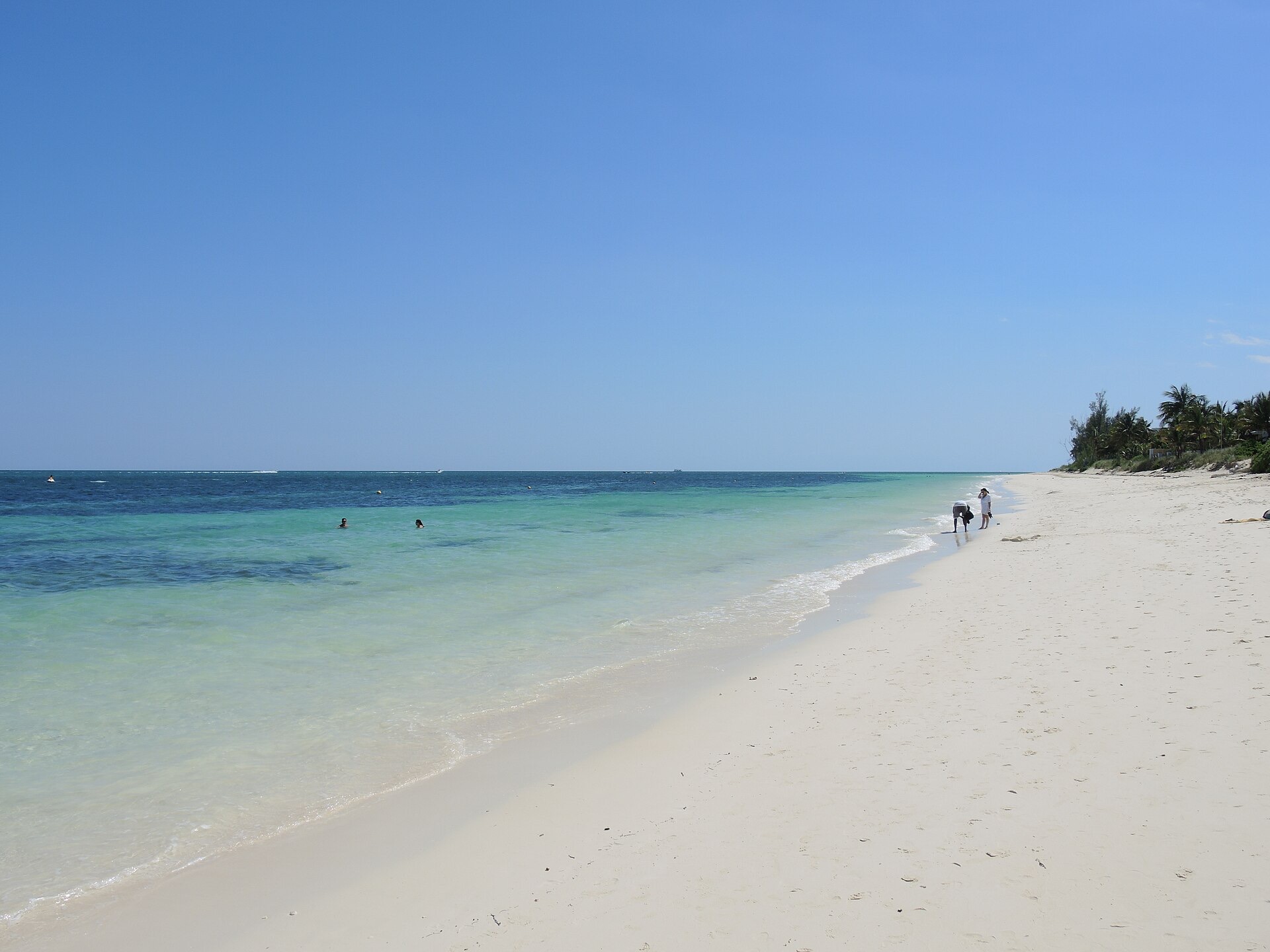
Lucaya Beach, Grand Bahama. The northernmost main island is the coolest in winter and the most exposed in hurricane season. Photo : Pietro, Wikimedia Commons, CC BY-SA 3.0.

Hurricane season: June 1 to November 30
The Atlantic hurricane season officially runs June 1 to November 30, and the NOAA National Hurricane Center puts the statistical peak at September 10, with the most activity between mid-August and mid-October. The Bahamas Department of Meteorology is blunter about local effects: it treats mid-July through October as the period that matters here, and names August, September and October as the months of highest frequency of cyclone effects or approaches within 100 miles.
The practical rules:
- Book June, July or November if you want the wet season without the sharpest risk.
- Take the insurance for any trip between mid-August and mid-October, and read the hotel's storm policy before you pay a deposit.
- Watch the northwest. Grand Bahama and Abaco sit on the side of the archipelago most exposed to systems tracking up from the southeast.
- Charter earlier, not later. Yacht and sailing operators in the Exumas reset schedules from late summer, which is why chartering is usually a spring job. Our Exuma sailing primer covers the calendar.
- September is the true low. Both 2024 and 2025 show the same shape: 55,897 air arrivals in September 2024 and 52,641 in September 2025, against March peaks above 200,000. Hotels close for refits in that window, so check the property is open before you price the flight.
The Bahamas month by month
This table is the year in one view. Temperatures and rain are for Nassau, sea temperature is off New Providence, and the arrivals column is the official count of foreign air arrivals in 2025, which tracks overnight visitors rather than cruise passengers.
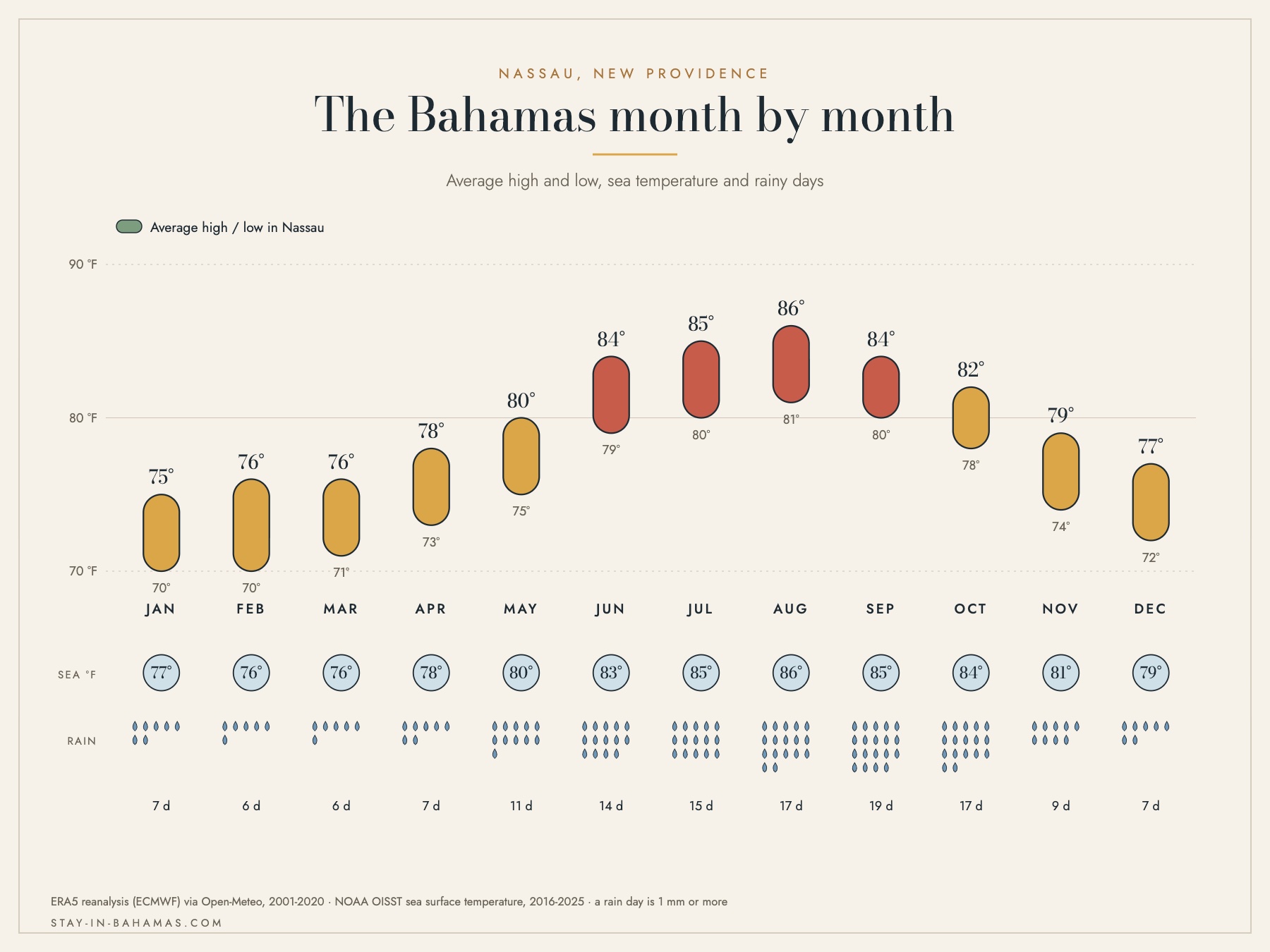
Nassau month by month: air and sea temperature, and rainy days.
| Month | High / Low °F (°C) | Sea °F (°C) | Rain in (mm) | Rain days | Air arrivals 2025 | In three words |
|---|---|---|---|---|---|---|
| January | 75 / 70 (24 / 21) | 77 (25) | 1.4 (35) | 7.3 | 134,492 | Dry, breezy, bright |
| February | 76 / 70 (24 / 21) | 76 (25) | 1.1 (27) | 6.0 | 151,653 | Driest, calm, cool |
| March | 76 / 71 (25 / 22) | 76 (25) | 1.2 (30) | 6.2 | 201,081 | Peak, dry, crowded |
| April | 78 / 73 (26 / 23) | 78 (26) | 2.1 (53) | 7.2 | 173,042 | Sunniest, dry, regattas |
| May | 80 / 75 (27 / 24) | 80 (27) | 3.7 (93) | 10.8 | 153,087 | Warming, first showers |
| June | 84 / 79 (29 / 26) | 83 (28) | 3.1 (79) | 14.2 | 165,415 | Humid, green, festive |
| July | 85 / 80 (30 / 27) | 85 (30) | 2.7 (68) | 15.1 | 171,034 | Hot, stormy, cheaper |
| August | 86 / 81 (30 / 27) | 86 (30) | 4.3 (110) | 17.2 | 116,269 | Hottest, wet, lobster |
| September | 84 / 80 (29 / 26) | 85 (30) | 4.8 (123) | 19.1 | 52,641 | Wettest, riskiest, emptiest |
| October | 82 / 78 (28 / 25) | 84 (29) | 5.4 (136) | 17.2 | 82,545 | Wet, humid, quiet |
| November | 79 / 74 (26 / 24) | 81 (27) | 2.6 (66) | 9.3 | 122,892 | Dry returns, value |
| December | 77 / 72 (25 / 22) | 79 (26) | 1.6 (40) | 7.2 | 164,643 | Festive, busy, dry |
Air and rain: ERA5 reanalysis (ECMWF) via Open-Meteo, monthly means 2001-2020, Nassau. A rain day counts 1 mm or more. Sea: NOAA OISST, 2016 to 2025 averages off New Providence. Arrivals: Bahamas Ministry of Tourism, Investments and Aviation, Total Foreign Arrivals Summary Report, first port of entry, 2025. Reanalysis grids smooth island rainfall: the Department of Meteorology's own gauge record gives August as the wettest month for New Providence at 9.28 in (235 mm) and January as the driest at 1.86 in (47 mm), so read the monthly totals above as the shape of the year rather than a gauge reading.
The best time for what you want to do
The right month depends less on the destination than on the activity, because the wind, the water temperature and the fishing calendar do not move together.
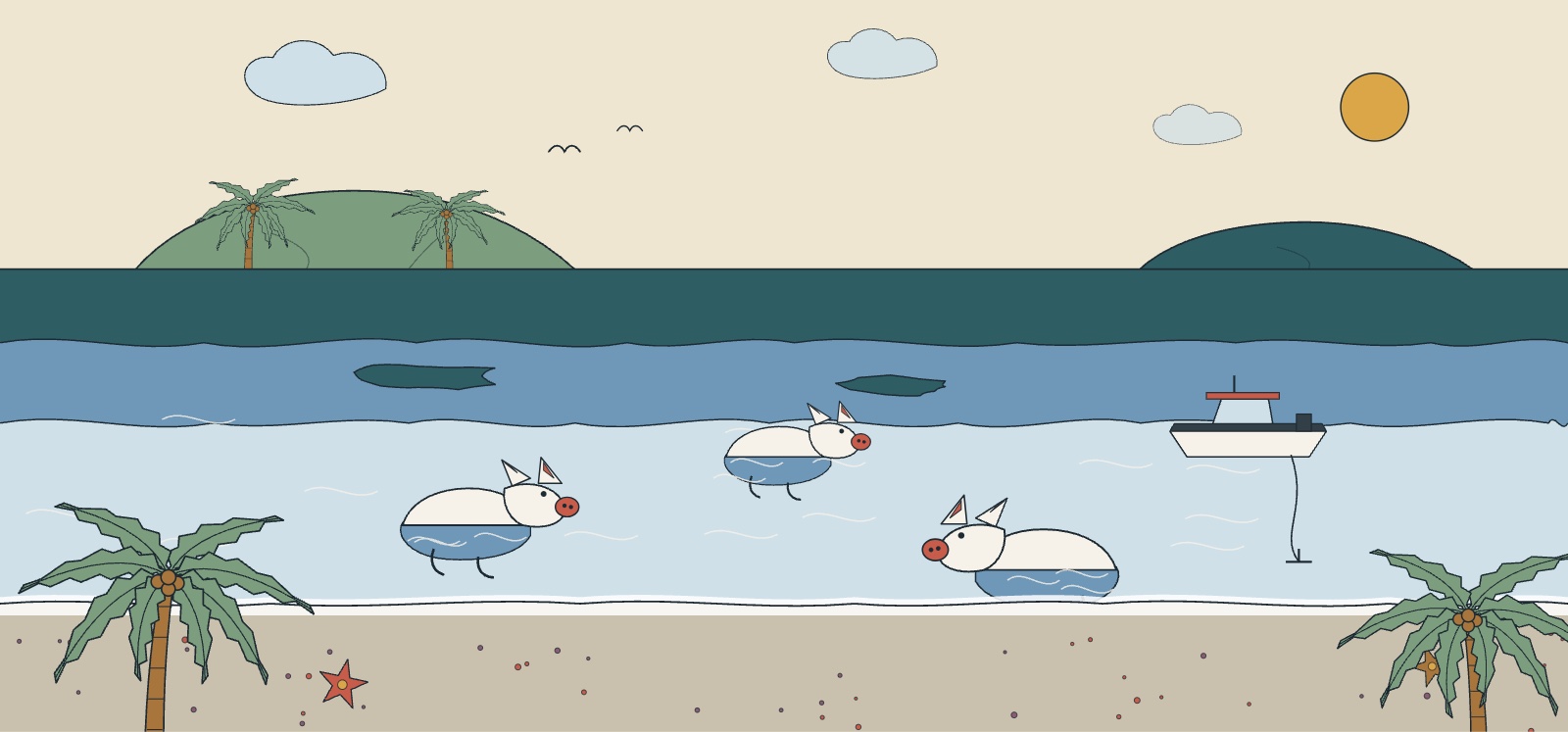
The swimming pigs of Big Major Cay, in the Exuma Cays, are a boat day: December to May is when the sea is calmest. Illustration : Luxury and Premium Hotel Booking in Bahamas.
- Beach days and swimming: any month. The coolest water of the year, 76 °F (25 °C) in February, is still warm enough for most people. For the flattest, warmest water, take late May to early July.
- Snorkeling and diving: May to September, when the sea runs 80 to 86 °F (27 to 30 °C) and the trade winds are lightest. The Andros barrier reef and Dean's Blue Hole on Long Island both reward the calm months.
- Sailing and chartering: March to June. Winter fronts bring 25-knot northerlies every few days, and the hurricane window closes the back end of the season.
- Bonefishing: the flats fish year round, but March to June and October to November combine light wind with comfortable wading temperatures. Start with our bonefishing guide.
- The swimming pigs and the Exuma cays: December to May, when boat days are least likely to be blown out. See which animal encounters are worth the boat ride.
- Families: late April, May, or the first half of June, before the heat peaks and after the spring crowd clears. Family hotels fill fastest over Easter and Christmas.
- Couples and quiet: November and early December. Adults-only properties are easiest to book in those weeks.
- Eating well: August to March for crawfish, since the season is closed April 1 to July 31. Our summer food guide follows the opening.
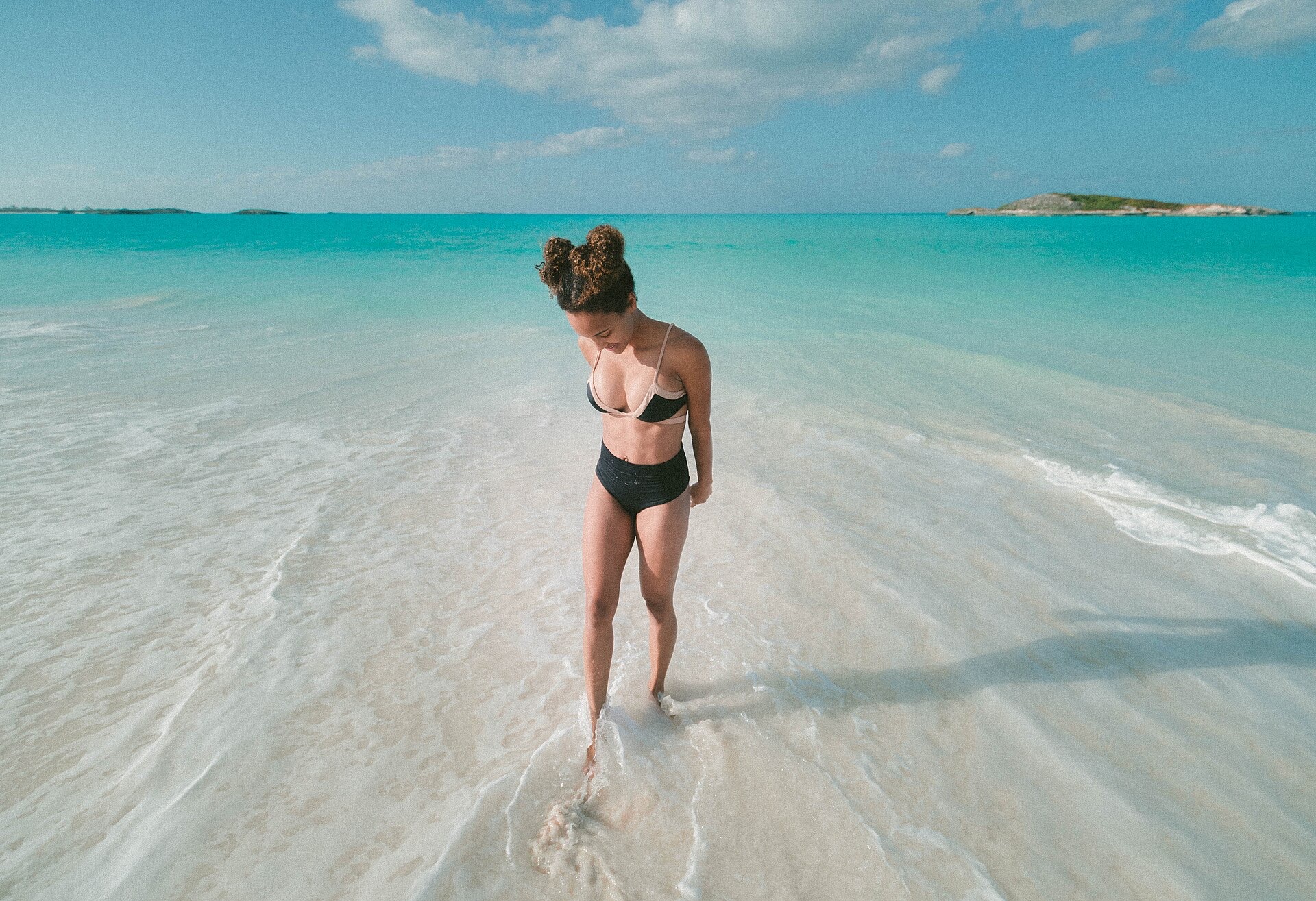
Great Exuma. The cays are drier than Nassau in winter and wetter in October, at 178 mm against 136 mm. Photo : Jakob Owens, Wikimedia Commons, CC0.

The arrivals curve below is the single most useful crowd signal the Bahamas publishes, because it counts people who sleep on the islands rather than day visitors off a ship.
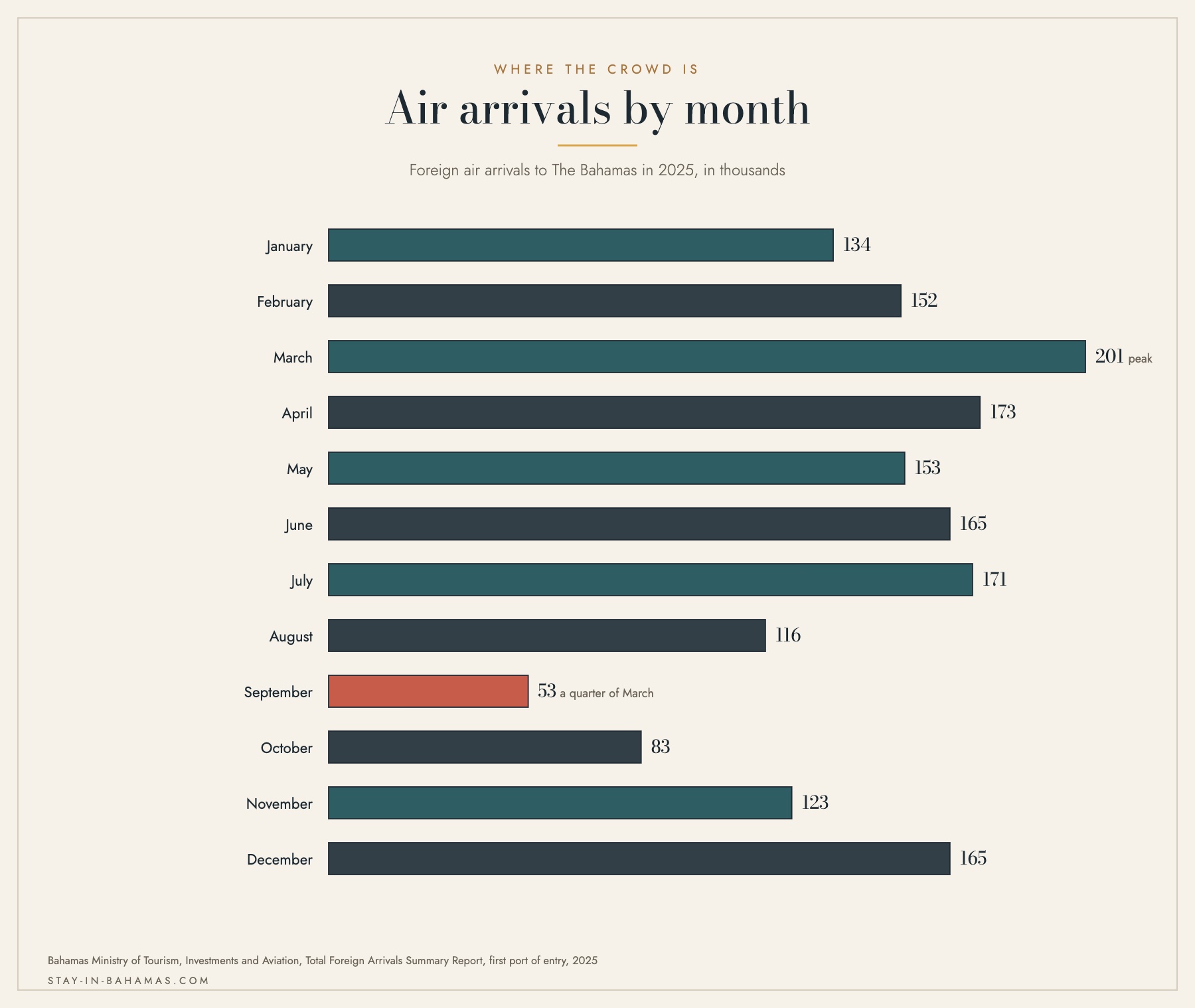
Foreign air arrivals by month, 2025: March peaks at 201,081, September falls to 52,641.
Events that shape the year
Four dates move hotel demand more than the weather does, and two of them are in the same fortnight.
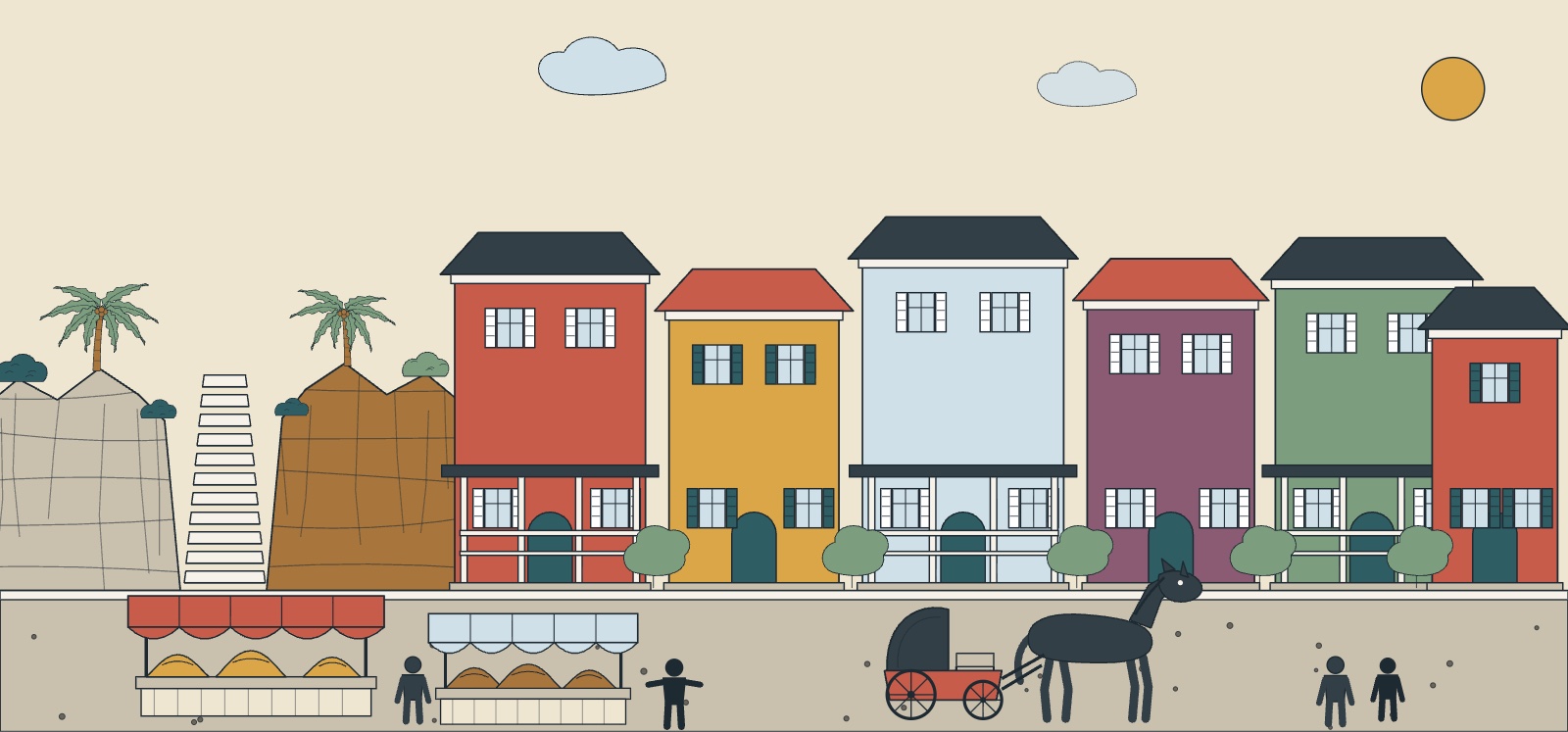
Nassau, where Junkanoo takes over Bay Street in the small hours of Boxing Day and New Year's Day. Illustration : Luxury and Premium Hotel Booking in Bahamas.
- Junkanoo, Boxing Day and New Year's Day, Bay Street in Nassau and across the Family Islands. The parades run in the small hours, roughly 1 a.m. to 9 a.m. Rooms in Nassau are committed months ahead. Our guide to Junkanoo beyond the parade covers the island versions.
- National Family Island Regatta, George Town, Exuma, late April. The 70th edition ran April 21 to 25, 2026 in Elizabeth Harbour, with Bahamian wooden sloops racing in four classes. Great Exuma has limited rooms, so this is the one week of the dry season when the Exumas are genuinely full.
- Bahamas Carnival, Nassau, early June, alongside the Sir Randol Fawkes Labour Day Junkanoo parade. The 2026 edition ran June 3 to 7.
- Pineapple Fest, Gregory Town, Eleuthera, first weekend of June, and All Andros Crab Fest, Fresh Creek, Andros, the second weekend of June. Both are Out Island festivals with small room stock nearby.
Two fixed dates fill domestic travel rather than hotels: Independence Day on July 10 and Emancipation Day on the first Monday in August. The crawfish season opening on August 1 is the food calendar's real marker.
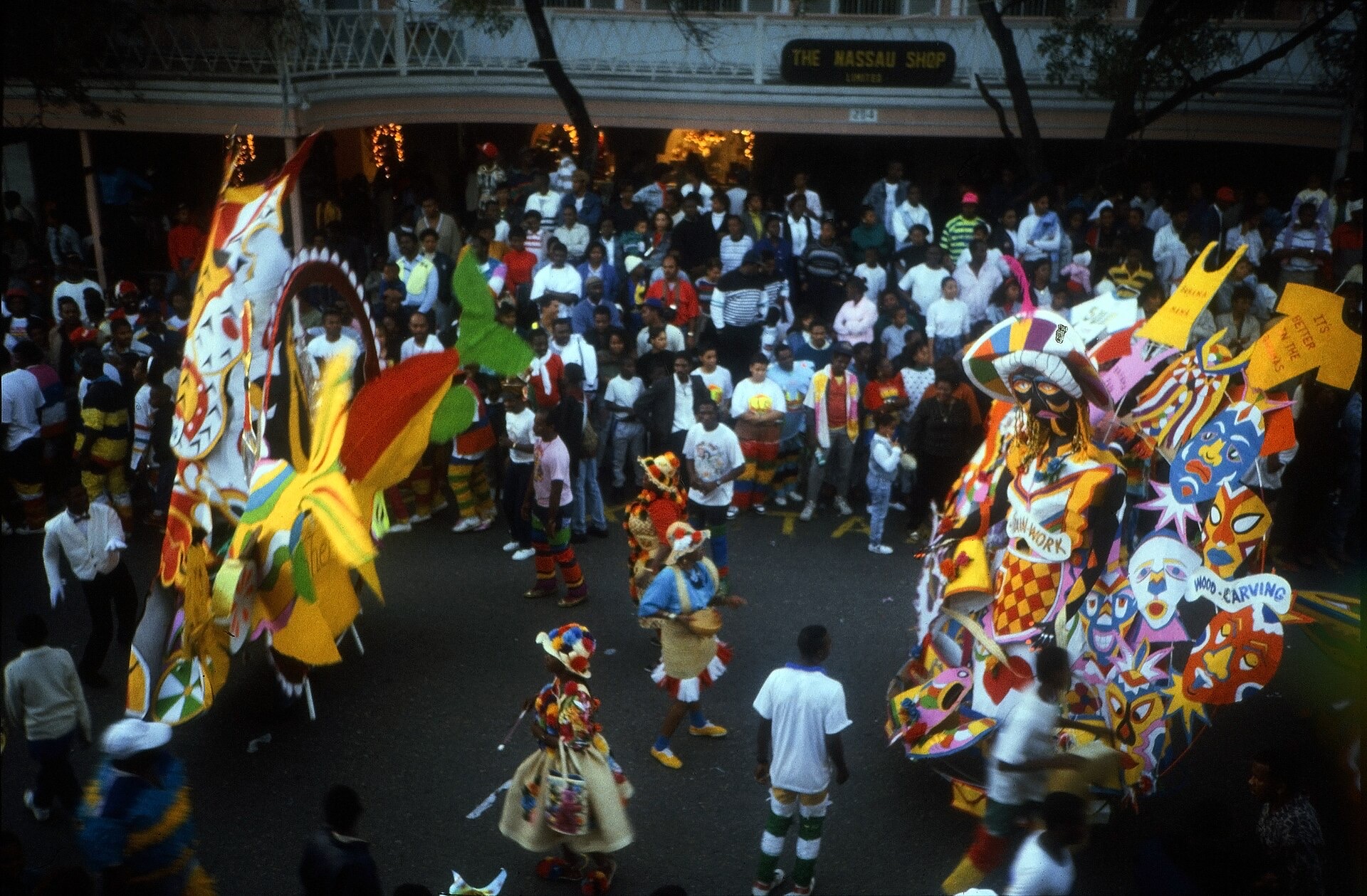
Junkanoo in Nassau. The parades run roughly 1 a.m. to 9 a.m. on Boxing Day and New Year's Day. Photo : Rüdiger Stehn, Wikimedia Commons, CC BY-SA 2.0.

Where to stay
Where you sleep changes what the season feels like. In January 2025, 103,941 of the country's 134,492 air arrivals came through Nassau and Paradise Island, so the crowd curve above is really a New Providence curve.
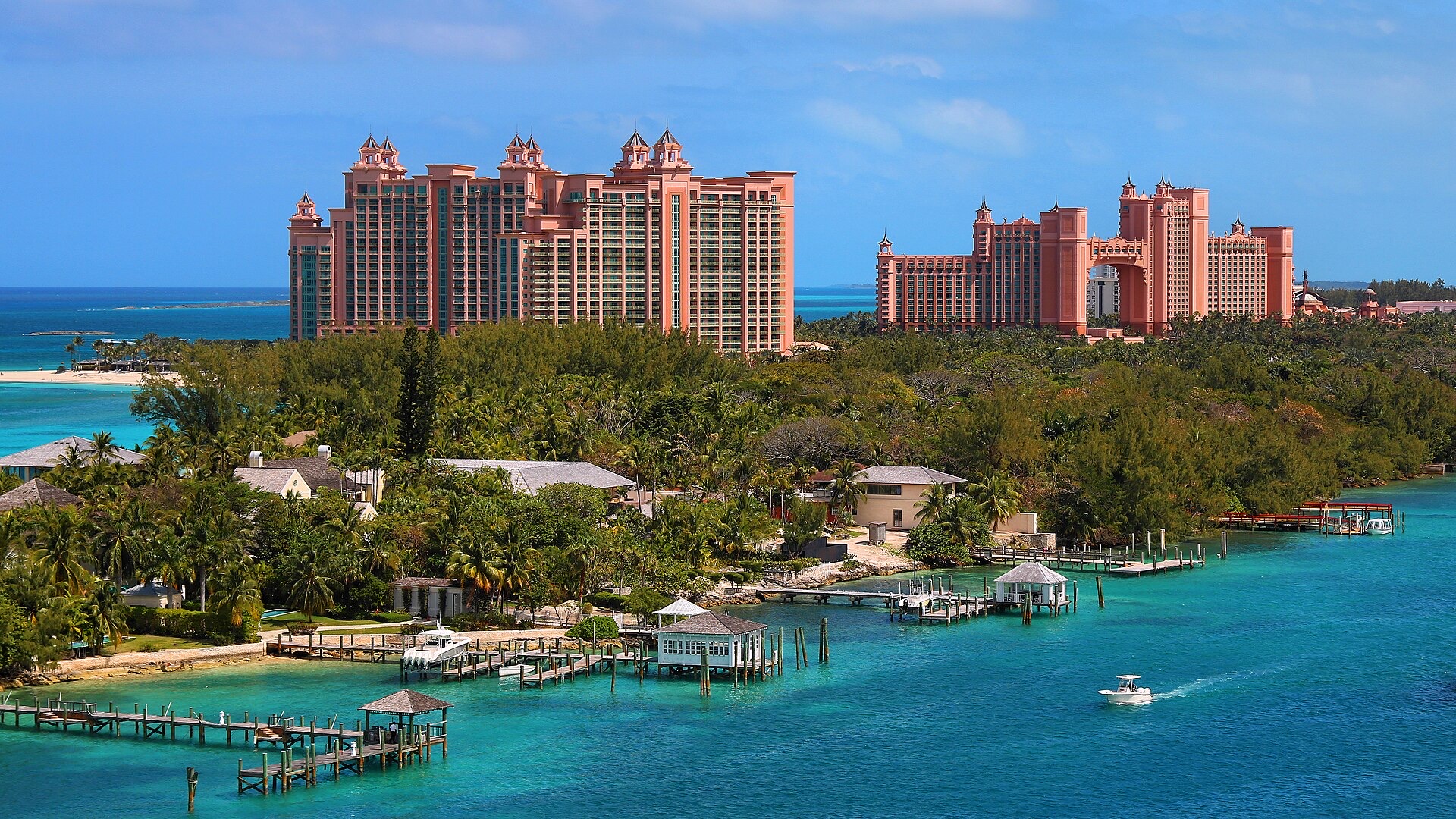
Paradise Island. In January 2025, 103,941 of the country's 134,492 air arrivals landed in Nassau and Paradise Island. Photo : Larry D. Moore, Wikimedia Commons, CC BY 4.0.

- Nassau hotels: closest to the airport and the cruise port, busiest between 9 a.m. and 4 p.m. on ship days, best value in September and October.
- New Providence: Cable Beach and the quieter east end, useful when winter fronts make the north shore choppy.
- Harbour Island: pink sand and a small room stock, which is why Easter and Christmas sell out first.
- Eleuthera: long island, two coasts, and the best chance of finding shelter from whichever way the wind is blowing.
- Grand Bahama: the northernmost of the main islands, coolest in winter, most exposed in hurricane season.
- The Out Islands: Andros, Cat Island, Long Island and the Exumas, where several properties close for refits in September and October.
FAQ
What are the best and worst months to visit the Bahamas?
The best months are February, March and April: Nassau records 27 to 53 mm of rain and 6.0 to 7.2 rainy days, and the sea holds 76 to 78 °F (25 to 26 °C). The worst is September, the wettest month in Nassau at 123 mm, the statistical peak of the hurricane season, and the month with the fewest air arrivals in both 2024 and 2025.
What month is the cheapest to go to the Bahamas?
September and October are the cheapest months, because demand collapses. The Bahamas recorded 52,641 air arrivals in September 2025 and 82,545 in October, against 201,081 in March. Lower demand moves hotel rates and airfares, but it is also the peak of hurricane risk, and some Out Island properties close for refits in those two months.
What is the hurricane season in the Bahamas?
The Atlantic hurricane season runs June 1 to November 30, and NOAA's National Hurricane Center puts the statistical peak at September 10. The Bahamas Department of Meteorology treats mid-July through October as the period that matters locally, and names August, September and October as the months with the highest frequency of cyclone effects or approaches within 100 miles.
What is the hottest month in the Bahamas?
August is the hottest month. Nassau averages a high of 86 °F (30 °C) and a low of 81 °F (27 °C), and the sea off New Providence reaches 86 °F (30 °C). The Department of Meteorology notes that summer temperatures seldom rise above 90 °F (32 °C) by day and rarely fall below 78 °F (26 °C) at night.
Which month is the rainiest in the Bahamas?
In the reanalysis series used here, October is the wettest month in Nassau at 136 mm, followed by September at 123 mm; Exuma peaks even higher in October at 178 mm. The Department of Meteorology's own gauge record for New Providence names August, at 9.28 in (235 mm). Either way, the wet half of the year is late May to October.
Is it warm enough to swim in the Bahamas in February?
Yes. February is the coolest month for the sea, and it still averages 76 °F (25 °C) off New Providence, with air highs of 76 °F (24 °C). Most swimmers are comfortable. A long snorkeling session is easier in a rash guard, and the bigger February variable is wind, since cold fronts cross about once every five days.
Is November a good time to go to the Bahamas?
November is one of the best-value months of the year. The dry season starts, Nassau drops to 66 mm of rain over 9.3 days, the sea still holds 81 °F (27 °C), and hurricane season ends on November 30. Air arrivals in November 2025 were 122,892, roughly 61 percent of the March peak, so hotels are open but not full.
Does it rain a lot in the Bahamas in September?
September is the wettest month in Nassau in this series, at 123 mm over 19.1 rainy days, meaning rain falls on about two days in three. It usually comes as an afternoon shower or thunderstorm of up to an hour rather than all-day rain, but September is also the statistical peak of the hurricane season, so the risk is not only about rainfall.
Read next
- The Bahamas in September: why shoulder season is the smartest booking window
- The Bahamas in June: weather, rates and why insiders book now
- Chartering the Exumas before hurricane season: a sailing primer
- How to move between islands in the Bahamas: flights, ferries and private charters
- Why Christmas in the Bahamas turns luxury hotel stays into a tropical tradition